
About the Project:
The PAD-Ufes program has been operating for over 30 years with the objective of providing information, early diagnosis, and treatment for skin cancer to people in 11 municipalities in the state of Espírito Santo, Brazil. The team of volunteers includes professors, technicians, and students from various courses, such as medicine, computer science, and chemical engineering. As a developer, I am currently working on producing a new platform for the program, which is named “Dermatological Analysis Software” (SADE, in portuguese), and will improve the way consultations and surgeries are organized, allowing for more efficient and effective care for those in need.
Program Overview
The PAD-Ufes team organizes consultation and surgical events in different regions, allowing for access to healthcare for people who may not otherwise have access to medical care. During these events, volunteers provide information about prevention and perform diagnostic exams, allowing for early detection of skin lesions. They also perform minor surgeries, reducing the need for more invasive treatments and improving the quality of life for those in need.
My Role in the Project
As a PADTech developer at UFES, I am currently working with other 4 students on producing a new platform for the program. The platform will improve the organization of consultations and surgeries, making it more efficient and effective. This will enable the program to reach more people and provide better care for those in need. By working on this project, I am contributing to the improvement of healthcare access and quality of life for people in underserved areas.
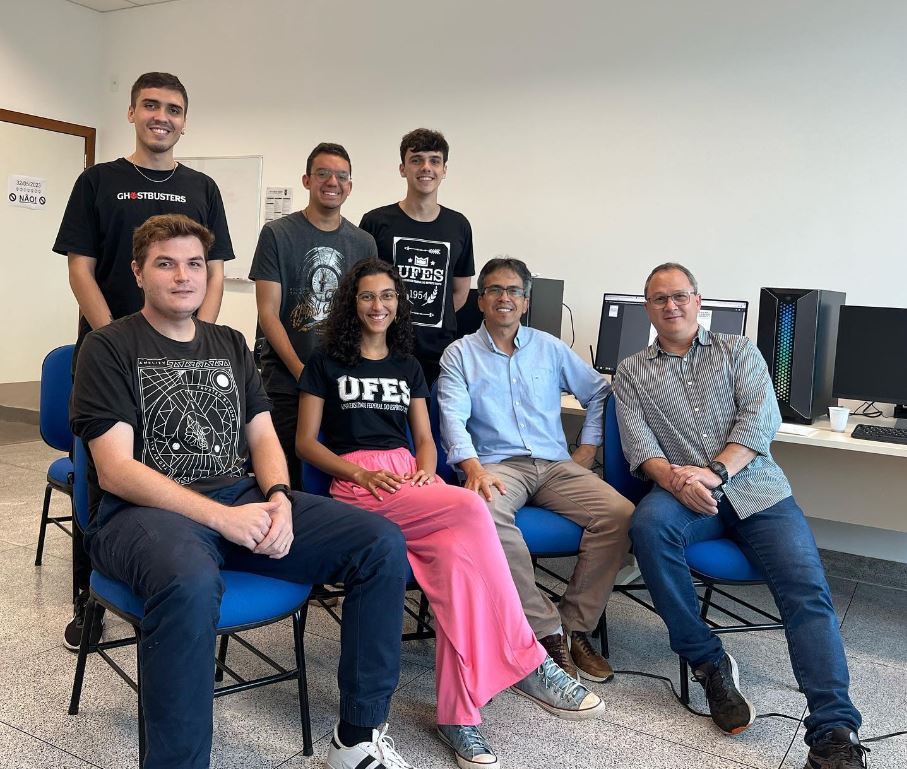 This is the team involved in the project, including me!
Details
Since the population’s access in the served areas can be quite precarious, PAD Ufes operates in collective efforts, bringing several medical students, doctors, and professors to assist and provide clinical diagnosis for the detected lesions. And along the municipality workers, the flow of care during the collective effort is as follows:
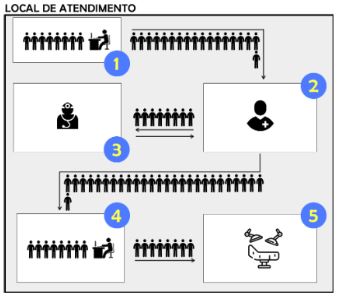 The flow of care
- In number 1, we have all the patients arriving and checking their appointment with the municipality workers. If they have an appointment, they are directed to the waiting room.
- On number 2, we have the medicine students gathering relevant information about the patient's medical background, current symptoms, and then, they'll take a picture of the lesion, and maybe send them to surgery, to be performed in the same day.
- Number 3 is where the actual doctors will analyze the patient's information and the lesion, and then, they'll decide if the patient needs to be sent to surgery or don't. If not, the patient will get the prescribed medications and will be sent home from here.
- Number 4 is when the patient actually got sent to surgery to remove the lesion, and a few more data will be colected from him, making sure he can actually be in a surgical procedure in that present day.
- Number 5 is the actual surgery, where the patient will get the supposed lesion extracted, and the biological material will be sent to biopsy, to check if that lesion was carcinogenic or not, and if it was, malignant or benign cancer. This information will be extremely valuable later to train the classification AI.
 A general view of the website
Speaking in more depth, the system was developed using Angular for the Frontend, Java Spring-Boot for the Backend, with MySQL database being utilized. We also used a free template for Angular called CoreUI, to accelerate the developing proccess. Among its general functionalities, we have structured data collection for patients, including information related to the consultation associated with them during the collective effort, details about the lesions they present, and records of any surgeries performed, along with their respective diagnoses.
We also have user management, which includes municipalities participating in the collective effort, medical students for the consultation part, and an automatic printing system for medical prescriptions – all designed to save time between consultations and ensure that the highest possible number of people are attended to.
Anyways, there is a lot to cover about this project, and i couldn’t be happier knowing that the code that i’m writing is having an impact on real people, I’ll be updating this page as the project goes on!